Sunday, September 19, 2010

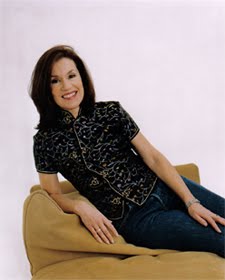
Against Promotional Author Photos


Flavorwire makes their case.

Trial and Eros


The American Scholar has an interesting essay about when Lady Chatterley’s Lover ran afoul of Britain’s 1959 obscenity law.

From the piece...

And pretty further he went. In charting the love affair between Constance Chatterley and Oliver Mellors, the gamekeeper on her (wheelchair-bound) husband’s estate, the book describes their 13 sexual encounters in meticulous and unflinching detail. Arguably even more transgressive was the language that Lawrence, in his quest for realism, allowed his characters to employ. As the prosecutor in the 1960 trial, Mervyn Griffith-Jones, was to note in court: “The word ‘fuck’ or ‘fucking’ occurs no less than 30 times. . . . ‘Cunt’ 14 times; ‘balls’ 13 times; ‘shit’ and ‘arse’ six times apiece; ‘cock’ four times; ‘piss’ three times, and so on.”

Lawrence, who spent the last years of his life in Italy and died in France in 1930, was aware that the book could not be published in England, at least not in the form he intended. Since 1868, obscenity had been a common-law offense, (unhelpfully) defined as any material whose tendency “is to deprave and corrupt those whose minds are open to such immoral influences.” No one seemed to have any doubt that Chatterley would fall in the dead center of that definition. Lawrence acted as his own publisher and had the book composed, printed, and bound in Florence. Britain’s intrepid John Bull magazine, a venerable repository of conventional wisdom, got hold of a copy and characterized it as “the most evil outpouring that has ever be­smirched the literature of our country. The sewers of French pornography would be dragged in vain to find a parallel in beastliness.” Britons smuggled the book past customs inspectors for decades, and from time to time copies were seized and burned.

Remarkably, this was the way matters stood until 1959, when liberal members of Parliament, under the leadership of Roy Jenkins, passed a new Obscene Publications Act. It kept the “deprave and corrupt” language for defining obscenity, but characterized the potential objects of corruption more generally, as “persons who are likely . . . to read, see or hear the matter contained or embodied in it.” Crucially, the act provided that the work in question be “taken as a whole”—that is, merely reading out the naughty bits would not suffice—and held that a defendant “shall not be convicted . . . if it is proved that publication of the article in question is justified as being for the public good on the ground that it is in the interests of science, literature, art or learning, or of other objects of general concern.” Moreover: “the opinion of experts as to the literary, artistic, scientific or other merits of an article may be admitted . . . either to establish or to negative [sic] the said ground.”

Secrets of the Vatican Archives


The 85km of shelving in the Vatican's Secret Archives holds manuscripts and publications accumulated over more than 800 years. The Guardian wanders amongst them.

Saturday, September 18, 2010

What If Superheroes Were Hipsters?


That's the question asked by Comic Alliance after seeing the brilliant artwork by Caldwell Tanner.

What's Wrong with Books?

!!!!!!! [BESTIE x BESTIE 1] !!!!!!! from Dean Fleischer-Camp on Vimeo.

Times When You Shouldn't Be Reading Your Kindle


1) When you're on the highway in a bustling city. And you're on a bus. And you're the one DRIVING IT. KGW has more, here.

Jon's Writing in CC2K


It's guilty pleasures week on CC2K. I wrote about my continued fascination with Duran Duran. Enjoy!

Also, be sure to enjoy an extended version of "Wild Boys":

How Literary Culture Became Popular Culture


Pop Matters excerpts Bring on the Books for Everyone: How Literary Culture Became Popular Culture, by Jim Collins.

From the piece...

The most profound change in literary America after the rise of postmodern fiction wasn’t the next generation of cutting-edge novelists; it was the complete redefinition of what literary reading means within the heart of electronic culture. The really significant next new thing wasn’t a matter of radical innovations in literary craft but massive infrastructural changes in literary culture that introduced a new set of players, locations, rituals, and use values for reading literary fiction. Within the past decade media critics have argued that film viewing has changed so thoroughly that we need to reconsider the power of images since most visual entertainment is no longer enjoyed in the confines of the darkened theater but on screens that come in a seemingly endless variety of formats and locations, from iPods to laptops to theme park sensory extravaganzas. The private dream state that used to be considered the very bedrock of film-viewing pleasure no longer seems quite adequate for describing the multiple-choice gestalts of contemporary visual culture. New technologies of exhibition have reshaped the pleasures and practices that now define what going to a movie might mean. Yet I would argue that the experience of literary reading has been transformed to an even greater extent, since who reads it, how it is read, where it is read, and even what is read under the heading of literary fiction have all changed in fundamental ways.

What used to be a thoroughly private experience in which readers engaged in intimate conversation with an author between the pages of a book has become an exuberantly social activity, whether it be in the form of actual book clubs, television book clubs, Internet chat rooms, or the entire set of rituals involved in “going to Barnes & Noble.” What used to be an exclusively print-based activity—and fiercely proud of it—has become an increasingly image-based activity in which literary reading has been transformed into a variety of possible literary experiences. Of course you like Jane Austen—but how do you take your Austen? In novel form? As a television adaptation with Colin Firth, or as a film adaptation with Kiera Knightly? As a fictionalized account of reading Jane, as in The Jane Austen Book Club? If so, in novel form complete with reader’s guide, or the movie adaptation with Emily Blunt playing the character who reads Persuasion so passionately? Or as any and all of the above, at any given moment, as you surf through the possible Austen experiences?

Stephen Fry Says Bookshops Could Go the Way of Blacksmiths


The erudite Stephen Fry for The Bookseller.

From the piece...

Fry, a noted technophile, was asked by Sarah Taylor (location Strawberry Hill, Twickenham) what he thought "about new technology such as iPads/E-Books potentially destroying bookstores?" Fry responded on Waterstone's own Twitter account: "I think there'll be a hell of a culling, as there was of farriers and blacksmiths when the car came in. But not total".

Fry took over the Waterstone's Twitter for an hour yesterday as part of the promotion for his new book The Fry Chronicles (Michael Joseph), expected to be one of the biggest titles for bookshops this Christmas. Fry's publicity has been particularly digitally minded with the launch of an app, enhanced iBook, and a live event broadcast in about 60 cinemas.


Talking about all of this Fry techno business, the New Yorker highlights his myFry app.

And, while we're still talking about Fry, the Guardian has a podcast where Fry discusses a life in writing.

And, yes, we're still talking about Fry, Big Think has a great interview with him, here.

Friday, September 17, 2010

America is a Joke


New York Magazine has a great profile of Jon Stewart, "The Daily Show," and the process that goes in creating it daily.

From the piece...

“Jon has chronicled the death of shame in politics and journalism,” says Brian Williams, the NBC Nightly News anchor who is a frequent Daily Show guest. “Many of us on this side of the journalism tracks often wish we were on Jon’s side. I envy his platform to shout from the mountaintop. He’s a necessary branch of government.”

Glenn Beck is an even more frequent Daily Show presence—as a target. The Fox News star takes a different view—surprise, surprise—praising Stewart while dismissing him as mere entertainment. Even as he’s built an enviable political base, Beck knows he’s a showman, and he thinks that makes Stewart a kind of brother.

“Jon Stewart is very funny, and if I were in his position, I’d be doing a lot of the same things. In fact, a lot of the jokes I’ve heard before, either from my staff or myself,” Beck says by e-mail. “He takes things out of context (no worse than most of the other mainstream media) and is more interested in being funny than trying to actually understand the key messages in [my] show … But I don’t think he’s looking for a Pulitzer … People like Jon, his ratings are good. Good for him, keep doing what he’s doing. People seem to like watching my show as well, and hopefully that continues for both of us for a very long time.”

The Obama presidency was supposed to spell doom—or at least irrelevance—for Bush-satirizing comics like Stewart and his protégé Stephen Colbert. But a funny thing happened and is continuing to happen. Stewart is as essential as ever. Lately the show has been on a hot streak, exposing anti-mosque demagogues and carving up spineless Democrats. One of the lessons of the recent past is that the circus is in town no matter who is in the White House, which, while far from ideal for the state of our nation, has only increased the standing of a satirist like Stewart. Creating consistently funny and barbed bits four nights a week is extremely difficult, and not only because Stewart has to fend off the adulation of an audience that wasn’t entirely kidding with those STEWART/COLBERT ’08 bumper stickers. Constant exposure to the muck of politics can easily, and quickly, produce cynicism. Yet immersion in the political-media mess has left Stewart at once more bitter and more idealistic.

“Even if you’re eating delicious chocolate cake, there are moments you feel like, ‘I’ve had too much,’ ” Stewart says. “Now replace ‘chocolate cake’ with ‘shit taco’ and you know what our day is like every day. But this is not a fragile country. I’m not suggesting we couldn’t find ourselves in deep conflict. But we had slaves, and we fought a civil war; now we’re down to Glenn Beck being hyperbolic with his audience about nostalgia. This too shall pass.” Which doesn’t mean that Stewart is so confident in the inexorable triumph of good and right that he’s going to stop ridiculing the evildoers and charlatans.


Enjoy a recent episode where he interviewed Bill Clinton, here.

Friday's Poem

Elizabeth Bishop's "One Art":

Would You Buy Essays Like You Buy U2 Singles from iTunes?


Scribner is hoping so. The Los Angeles Times is reporting that they're going to start selling Chuck Klosterman's essays for 99 cents each.

From the piece...

All of these essays have been available elsewhere -- many were first published in magazines and later appeared in Klosterman's collections "Sex, Drugs and Cocoa Puffs," "Eating the Dinosaur," "Chuck Klosterman IV" and "Fargo Rock City."

Can Klosterman, with his high name recognition and strong opinions, lure readers to purchase older material for a modest price? Will well-loved essays sell better than those that are less known?

The essay collections are already available as ebooks, but now Scribner has also parceled them out and repackaged them by theme. Typically, essay collections wind up being chronological, but these sets -- 10 to 14 essays for $7.99 -- are grouped by topic. There is "Chuck Klosterman on Sports," "Chuck Klosterman on Media and Culture," "Chuck Klosterman on Rock" and so on.


And, here's some U2:

Want a Signed Edition of Catcher in the Rye AND Help Cure Cancer?


Now's your chance.

Thursday, September 16, 2010

The Freelancer


The New Yorker has an interesting story coming out of Memphis. That is, News that Ernest C. Withers, a photojournalist who documented the civil-rights movement, was also an F.B.I. informant.

Add to President Obama's Resume: Children's Book Author


A new book is being published in November.

From the story in the New York Times...

The book, illustrated by Loren Long, is a tribute “to 13 groundbreaking Americans and the ideals that have shaped our nation,” the publisher said, including Georgia O’Keeffe, Jackie Robinson and George Washington. The cover features an illustration of Mr. Obama’s daughters, Malia and Sasha, as they stroll across a grassy lawn with the family dog, Bo, leading the way.

Mr. Obama wrote the book before he took office in January 2009.

“It is an honor to publish this extraordinary book, which is an inspiring marriage of words and images, history and story,” Chip Gibson, the president and publisher of Random House Children’s Books, said in a statement, adding that the book “celebrates the characteristics that unite all Americans — the potential to pursue our dreams and forge our own paths.”

William Burroughs on...Led Zeppelin


For reals, care of Arthur Magazine.

From the piece...

So there we sat, I decline earplugs; I am used to loud drum and horn music from Morocco, and it always has, if skillfully performed, an exhilarating and energizing effect on me. As the performance got underway I experienced this musical exhilaration, which was all the more pleasant for being easily controlled, and I knew then that nothing bad was going to happen. This was a safe and friendly area–but at the same time highly charged. There was a palpable interchange of energy between the performers and the audience which was never frantic or jagged. The special effects were handled well and not overdone.

A few special effects are much better than too many. I can see the laser beams cutting dry ice smoke, which drew an appreciative cheer from the audience. Jimmy Page’s number with the broken guitar strings came across with a real impact, as did John Bonham’s drum solo and the lyrics delivered with unfailing vitality by Robert Plant. The performers were doing their best, and it was very good. The last number, “Stairway to Heaven”, where the audience lit matches and there was a scattering of sparklers here and there, found the audience well-behaved and joyous, creating the atmosphere of a high school Christmas play. All in all a good show; neither low nor insipid. Leaving the concert hall was like getting off a jet plane.

I summarized my impressions after the concert in a few notes to serve as a basis for my talk with Jimmy Page. “The essential ingredient for any successful rock group is energy–the ability to give out energy, to receive energy from the audience and to give it back to the audience. A rock concert is in fact a rite involving the evocation and transmutation of energy. Rock stars may be compared to priests, a theme that was treated in Peter Watkins’ film ‘Privilege’. In that film a rock star was manipulated by reactionary forces to set up a state religion; this scenario seems unlikely, I think a rock group singing political slogans would leave its audience at the door.


Here's a little Led Zeppelin concert footage for you:

Book Reveals Nazi Plans to Invade England


An interesting story in the Telegraph has surfaced about a Nazi briefing book that reveals how and where Hitler's troops hoped to land on the south coast of England.

From the piece...

Richard Westwood-Brookes, from Mullocks Auctioneers, said: "The book on Operation Sealion gives a fascinating insight into what life could have been like if the Germans had invaded.

"It would only have been issued to a few high-profile Nazi officials in advance of the invasion which was due to take place soon after.

"The book is a chilling reminder of what could have happened 70 years ago virtually to the day, had not ‘the few’ won the decisive Battle of Britain and caused the vital postponement of Hitler’s plan.

"It's a book with detailed maps and mile-by-mile surveys on the south coast of England, so the Germans knew where they were going and had profiles of the entire length of English coast."

Historical records show Hitler planned to invade England through six divisions of German troops heading to Kent via Folkstone and Ramsgate.

Another unit of four Nazi divisions would invade Sussex and Hampshire through Brighton and the Isle of Wight, while a third group of three German divisions would attempt to take Dorset via Lyme Bay.

Mr Westwood-Brookes added: "There are details in this book about where the Germans thought they could land safely and where they thought they might come across difficulty - it really was the blueprint for the Nazi invasion.


And since we're talking about Hitler...in newly discovered archives, notes the Telegraph, Hitler was a 'cowardly pig,' according to those that fought with him in WWI.

Drive-By Shooting


The New Yorker celebrates Matt Dellinger's new book, Interstate 69: The Unfinished History of the Last Great American Highway, a book, I do believe, that I'd want to write and, now, at the very least, read.